Want your website to reach more people and perform better on Google? SEO can help you get there. It improves how search engines understand your content and helps readers find useful information. SEO WiseStudySpot.com is a topic worth understanding if you’re interested in website growth and digital marketing. From keyword research to backlinks, several SEO basics can shape your online success. You don’t need to be an expert to start learning these skills.
But getting better search results takes more than adding keywords to a page. Your website also needs helpful content, fast loading speed, and a simple structure. These elements can improve the experience for your visitors. This guide covers key SEO topics, useful tools, and practical website optimization tips. You’ll learn how technical SEO, content quality, and search intent work together. It will also help you understand how to build a stronger online presence over time.
What Is WiseStudySpot.com?
WiseStudySpot.com is a website name associated with searches about learning, technology, and digital information. People may encounter it while looking for SEO advice, software-related topics, or practical online resources. However, a website’s name alone doesn’t confirm its services, ownership, or exact purpose.
Before relying on any publication, review its actual pages and available information. Look for clear explanations, useful examples, updated articles, and transparent contact details. These signs help you judge whether the content matches your needs.
If you’re researching WiseStudySpot.com, start with these simple checks:
- Visit the exact website domain.
- Review its homepage and About page.
- Check its published articles and categories.
- Look for author information and publication dates.
- Confirm whether it offers articles, tools, or both.
For example, imagine you’re searching for a beginner-friendly SEO guide. You should check whether the article explains keyword research and website optimization clearly. Don’t assume the website provides professional SEO services just because it discusses SEO.
The important point is simple: understand what the website actually publishes before deciding whether it’s useful.
What Does SEO WiseStudySpot.com Mean?
The phrase SEO WiseStudySpot.com combines the website name with Search Engine Optimization. People may use this search term to find information about the website’s SEO-related content, digital marketing topics, or online publishing resources.
SEO refers to the methods used to improve a website’s visibility in unpaid search results. These methods include keyword optimization, technical SEO, content quality, internal linking, and website performance. Together, they help search engines understand pages and connect them with relevant searches.
The phrase itself doesn’t prove that WiseStudySpot.com operates a dedicated SEO platform. It may simply describe someone’s interest in the website and its connection to search optimization.
For example:
- A beginner: Wants to understand basic SEO concepts.
- A blogger: Needs better keyword research ideas.
- A website owner: Wants to improve organic traffic.
- A digital marketer: Searches for useful content marketing resources.
Understanding search intent helps you find the right information. If you need an SEO lesson, an informative article may help. If you need backlink reports or keyword tracking, you’ll need a dedicated tool.
What Type of Content Does WiseStudySpot.com Publish?
The best way to understand a website’s content is to examine its actual articles. Search results and third-party descriptions can offer clues, but they don’t replace direct verification. Check the website’s categories, recent posts, and individual pages before making assumptions.
Technology publications often cover several related subjects. These may include software reviews, digital marketing, website development, artificial intelligence, and practical how-to guides. However, each category should be confirmed through the website’s published material.
When reviewing WiseStudySpot.com, pay attention to these content types:
- Educational articles: Explain digital concepts in simple language.
- How-to guides: Provide steps for completing specific tasks.
- Software reviews: Discuss features, benefits, and limitations.
- SEO content: Covers keyword research and website optimization.
- Technology updates: Explain relevant tools and industry trends.
- Digital marketing guides: Discuss content promotion and online visibility.
For example, a guide about WordPress might explain website management and content publishing. Another article could discuss Shopify and basic E-commerce SEO.
Look for practical information rather than broad claims. Useful content should answer questions and give readers clear next steps.
Who Is WiseStudySpot.com Designed For?
A website’s intended audience becomes clearer when you examine its topics and writing style. Readers usually prefer resources that match their experience level and solve specific problems. Clear explanations can help beginners understand digital subjects without feeling overwhelmed.
People interested in SEO, technology, and online publishing may find relevant educational material useful. However, experienced professionals often need detailed reports, advanced software, and reliable website analytics.
Potential audiences include:
- Students: Interested in technology and digital skills.
- SEO beginners: Learning how search engines work.
- Bloggers: Improving website content and organic traffic.
- Digital creators: Building stronger online visibility.
- Freelancers: Learning about digital marketing practices.
- Website owners: Understanding website management and optimization.
Consider someone starting a personal blog. They may need help understanding meta titles, header tags, internal linking, and keyword placement. Beginner-friendly articles can explain these concepts.
An experienced marketer has different needs. They may require detailed SEO reporting, competitor research, and backlink analysis.
Choose resources based on your current goals rather than assuming one website suits everyone.
What SEO Topics Are Associated With WiseStudySpot.com?
Search Engine Optimization includes several connected practices. Each practice helps improve a different part of website visibility, performance, or content quality. Understanding these areas gives you a stronger foundation for evaluating SEO-related articles.
Some important SEO topics include keyword research, on-page SEO, technical SEO, backlinks, and content marketing. Other useful areas include Local SEO, Semantic SEO, website indexing, and mobile optimization.
These practices work together rather than operating as separate tricks. A website may publish excellent content but struggle with technical problems. Another site may load quickly but fail to answer its audience’s questions.
Here are the main SEO topics worth understanding when researching WiseStudySpot.com.
Read Also:Best Locro De Zapallo Near Me: Where To Find Authentic Peruvian Squash Stew
Keyword Research and Search Intent
Keyword research helps you understand the words people enter into Google Search. It also reveals the questions, problems, and interests behind those searches. Choosing relevant phrases gives your content a clearer direction.
However, search volume alone doesn’t determine whether a keyword suits your article. You must also understand search intent. This means identifying what someone expects to find after entering a particular query.
Common search intents include:
- Informational: Someone wants to learn about a topic.
- Navigational: Someone wants to visit a particular website.
- Commercial: Someone wants to compare available options.
- Transactional: Someone wants to complete an action.
For example, someone searching for how to improve website SEO probably wants practical advice. A person searching for SEO software comparison expects a discussion of different products.
Good keyword research considers relevance, competition, and user needs. It also helps you organize related topics through Semantic SEO.
A simple conversation might look like this:
Reader: How can I get more organic traffic?
SEO writer: Start by researching relevant keywords and understanding what your audience wants to learn.
This approach makes keyword optimization more useful and natural.
On-Page SEO and Content Optimization
On-Page SEO focuses on the elements you control within individual webpages. It helps readers and search engines understand what each page covers. A clear structure also makes information easier to find.
Important on-page elements include:
- Meta titles: Describe the page’s main subject.
- Meta descriptions: Summarize the page for search users.
- Header tags: Organize information into clear sections.
- URL optimization: Keeps page addresses descriptive.
- Internal linking: Connects related pages on your website.
- Image optimization: Uses suitable image sizes and descriptions.
- Content optimization: Improves clarity, relevance, and usefulness.
For example, an article about website performance should explain loading speed, mobile usability, and Core Web Vitals. Its headings should reflect the information readers expect to find.
Content quality matters more than repeating the same keyword. Include relevant terms naturally and answer related questions where they genuinely fit.
Helpful Content should give readers useful information instead of filling pages with repeated phrases. Strong on-page SEO supports that goal by making content easier to understand and navigate.
Technical SEO and Website Performance
Technical SEO focuses on how search engines access, crawl, and index website pages. It also covers technical elements that affect usability and website performance. Even excellent content can struggle when important pages remain inaccessible.
Website crawling allows search engines to discover pages through links and other signals. Website indexing involves storing and organizing eligible pages for possible inclusion in search results. These processes help determine whether your content can appear in relevant searches.
Important technical SEO areas include:
- Website structure and navigation.
- Mobile-friendly website design.
- Page speed and loading behavior.
- Broken links and redirects.
- XML sitemaps and indexing controls.
- Secure HTTPS connections.
- Core Web Vitals and user experience.
Imagine someone opens your blog on a phone. If the page loads slowly or the text becomes difficult to read, the experience suffers. Technical improvements can help make the website easier to use.
Google’s Core Web Vitals measure aspects of loading, responsiveness, and visual stability. Website owners can review these signals through appropriate performance tools.
Technical SEO isn’t about fixing every warning immediately. Focus on problems that affect access, usability, and important website functions.
Backlinks and Link Analysis
Backlinks are links from other websites that point toward your pages. They can help readers discover useful resources and provide search engines with additional context. Relevant, naturally earned links can support a website’s reputation.
However, more backlinks don’t automatically mean better search engine rankings. Their relevance, context, and source quality matter. A link from a trusted website within your subject area may provide more value than many unrelated links.
Link analysis helps you understand your website’s backlink profile. Depending on the software, reports may include:
- Total backlinks.
- Referring domains.
- Linking page addresses.
- Anchor text.
- Follow and nofollow attributes.
- Changes in backlink numbers.
Domain Authority is a third-party metric used by certain SEO platforms. It isn’t an official Google ranking score. Website Authority metrics can help with comparisons, but they shouldn’t replace careful analysis.
Link Building should focus on useful content and genuine relationships. Avoid shortcuts that create unnatural link patterns.
For example:
Website owner: Why isn’t my website ranking despite having many backlinks?
SEO specialist: Check link relevance, content quality, technical issues, and search intent before blaming one factor.
Content Marketing and Search Visibility
Content Marketing involves creating useful material for a specific audience. It helps businesses and publishers share knowledge, build recognition, and attract relevant visitors. Articles, tutorials, videos, and case studies can all support this process.
Search Visibility depends on several connected factors. Relevant topics, useful information, strong website structure, and effective content optimization can improve your chances of appearing in suitable search results.
A practical content strategy may include:
- Researching questions your audience asks.
- Publishing original and helpful articles.
- Updating outdated website content.
- Connecting related pages through internal links.
- Sharing useful resources with relevant audiences.
- Reviewing search performance regularly.
For example, a website about digital skills could publish guides about WordPress, Shopify, and AI Tools. Each article should answer a different question and provide clear information.
Organic Traffic becomes more valuable when visitors actually care about your content. Publishing dozens of unrelated articles won’t automatically create lasting growth.
A strong SEO Strategy focuses on reader needs, content quality, and consistent improvements.
Does WiseStudySpot.com Offer SEO Tools?
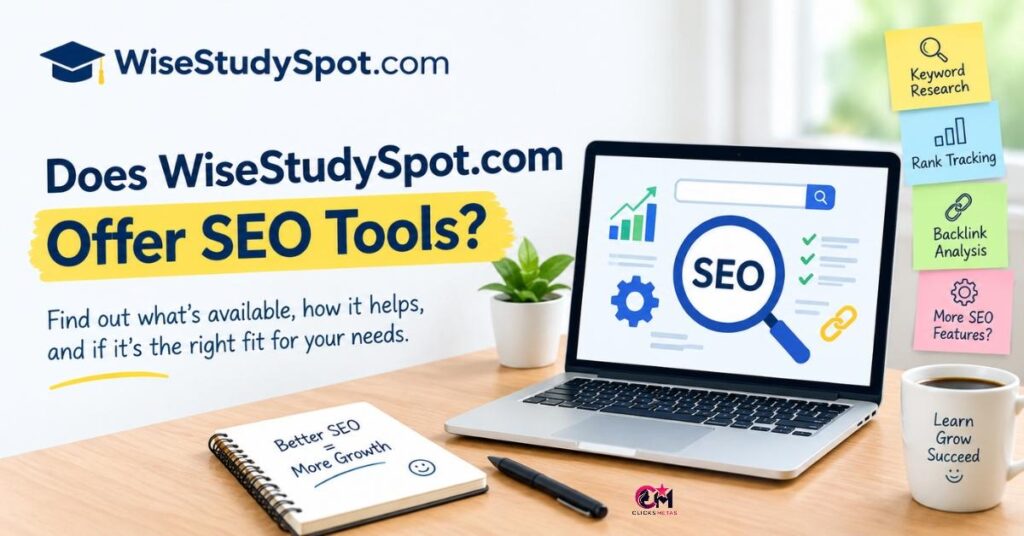
SEO Tools help website owners research keywords, inspect backlinks, monitor rankings, and identify website problems. However, publishing articles about these tools doesn’t mean a website provides the tools itself. This difference matters when evaluating WiseStudySpot.com.
A dedicated SEO platform usually offers interactive features. Users can enter a website address, select keywords, or generate reports. Educational websites generally explain how these processes work without necessarily performing them.
Before assuming WiseStudySpot.com offers specific features, check its actual website pages. Look for working interfaces, tool descriptions, access requirements, and available reports.
Useful features to look for include:
- Keyword research and keyword tracking.
- Backlink checking and link analysis.
- Website Audit and SEO Audit reports.
- Technical SEO recommendations.
- Website Analytics and performance reports.
A tool should demonstrate its functionality rather than simply describe it. If you can’t verify a feature, treat its availability as unknown.
How to Verify Whether a Backlink Checker Is Available
A backlink checker helps you examine websites linking to your domain. It can reveal referring domains, linking pages, and other details about your backlink profile. However, you should confirm that a website actually provides this functionality before relying on it.
Start by reviewing WiseStudySpot.com’s navigation menu and available resource pages. Search for a dedicated backlink checker rather than an article explaining backlinks. If a working tool exists, test whether it accepts a domain or webpage address.
Use this checklist when checking for a backlink checker:
- Find a clearly labeled backlink tool.
- Check whether it accepts website addresses.
- See whether it generates actual backlink reports.
- Review its data sources and update frequency.
- Check free access, usage limits, and pricing.
- Read its privacy policy before submitting information.
For example, an article titled Backlink Checker Guide isn’t necessarily a working tool. A genuine checker should provide an interface and return relevant data.
If you can’t find or test the feature, don’t assume it exists. Verify first and avoid relying on unsupported claims.
What to Look for in a Backlink Analysis Tool
A reliable backlink analysis tool should help you understand your website’s incoming links. It should provide useful information instead of showing impressive numbers without context. Good reports make it easier to evaluate link quality and identify unusual patterns.
Before selecting software, check which measurements it offers. Different platforms collect data differently, so their backlink counts won’t always match.
Important features include:
- Backlink count: Shows the links pointing toward your website.
- Referring domains: Identifies separate websites linking to you.
- Anchor text: Displays the clickable text used in backlinks.
- Link attributes: Shows follow and nofollow classifications.
- Link history: Helps track backlink gains and losses.
- Competitor analysis: Allows comparisons with competing websites.
Also examine the platform’s reporting options and data freshness. Some tools provide historical charts and downloadable reports. Others offer limited information through free accounts.
Remember that Domain Authority and similar metrics are third-party measurements. They don’t represent official Google rankings.
Choose software that answers your questions clearly. Reliable data matters more than a flashy dashboard.
Alternatives for Checking Backlinks and Website Performance
If WiseStudySpot.com doesn’t provide a working SEO tool, specialized software can handle specific research tasks. Different platforms serve different purposes. Therefore, choose one according to the information you need.
Here are some established options:
- Ahrefs: Offers backlink research, keyword research, and competitor analysis.
- Semrush: Provides keyword research, site audits, and competitive research.
- Google Search Console: Helps website owners review search performance, indexing, and link information.
- Google PageSpeed Insights: Evaluates page performance and provides improvement suggestions.
These platforms don’t perform identical tasks. Ahrefs and Semrush offer broader SEO research features. Google Search Console focuses on information about your website’s presence in Google Search.
For example, use Search Console to review impressions and clicks. Use PageSpeed Insights to investigate loading and performance issues.
Official resources: Google Search Console and PageSpeed Insights.
Who Can Benefit From WiseStudySpot.com?
The usefulness of WiseStudySpot.com depends on its published information and how well that information matches your goals. Readers interested in digital topics may benefit from clear explanations and practical learning resources. However, different audiences need different levels of detail.
Someone learning SEO basics may prefer simple articles and examples. An experienced marketer may need advanced reports, competitor research, and technical data. A small business owner might care more about website traffic and lead generation.
Potential audiences include:
- Students interested in digital skills.
- Beginners learning Search Engine Optimization.
- Bloggers developing a content strategy.
- Freelancers exploring digital marketing.
- Website owners improving online visibility.
- Digital creators learning about software and technology.
The key is choosing relevant information. Review each article before applying its recommendations to your website.
Beginners Learning SEO
Starting SEO can feel confusing because it introduces many unfamiliar terms. Keywords, backlinks, indexing, and technical SEO may seem complicated initially. Beginner-friendly explanations can make these subjects easier to understand.
A useful learning approach starts with the basics. Learn how search engines discover pages before studying advanced optimization techniques. Then practice improving a small webpage or sample blog article.
Beginners should understand these topics first:
- What Search Engine Optimization means.
- How keyword research works.
- Why search intent matters.
- How meta titles and descriptions work.
- Why internal linking helps navigation.
- How website indexing affects visibility.
For example, imagine you’re creating your first blog post. Start by choosing a topic people actually search for. Organize the article with useful headings and answer the main question.
Next, learn about technical SEO and backlinks. Don’t rush into complicated strategies before understanding the fundamentals.
A good learning resource should explain both the process and the reason behind each recommendation.
Bloggers and Content Creators
Bloggers need more than interesting ideas to build a successful website. They must understand their audience, choose relevant topics, and publish useful information. SEO helps connect their content with people searching for related answers.
Content creators can use keyword research to identify topics worth covering. They can also improve existing articles through content optimization and internal linking. These practices help create a more organized publishing strategy.
Bloggers should focus on:
- Finding relevant keywords and related questions.
- Writing helpful and original website content.
- Organizing articles with descriptive headings.
- Adding useful internal and external links.
- Optimizing images for faster loading.
- Updating outdated information.
- Reviewing organic traffic and keyword rankings.
For example, a technology blogger might publish separate guides about WordPress, Shopify, and AI tools. Each article should answer a specific reader question.
Content quality should always come first. Avoid publishing several similar articles just to target slightly different keywords.
A thoughtful content strategy creates a stronger experience. It also gives readers more reasons to revisit your website.
Freelancers and Digital Marketers
Freelancers and digital marketers often manage several projects at once. Each website may have different goals, audiences, and technical requirements. Understanding SEO helps professionals create recommendations that suit individual clients.
Educational resources can explain important concepts and introduce useful software tools. However, professional work often requires more detailed research. Marketers may need website audits, keyword reports, competitor analysis, and search performance measurements.
Important skills for digital professionals include:
- Keyword research and content planning.
- On-page SEO and technical SEO.
- Backlink research and link analysis.
- Website Analytics and SEO Reporting.
- Content Marketing and lead generation.
- Website Management and performance checks.
- Understanding Search Engine Guidelines.
Consider a freelancer managing a client’s WordPress website. They might improve page titles, fix broken links, and organize internal linking. Another project may require E-commerce SEO for a Shopify store.
The best recommendations solve actual problems. Professionals should also explain expected outcomes without promising guaranteed search engine rankings.
Small Business and Website Owners
Small business owners need websites that attract relevant visitors and make important information easy to find. SEO can support this goal by improving search visibility and helping potential customers discover useful pages.
Local SEO is especially important for businesses serving nearby communities. Accurate business information, clear service descriptions, and useful location pages can help people understand what a company offers.
Website owners should pay attention to:
- Clear product and service descriptions.
- Accurate contact information.
- Mobile-friendly website layouts.
- Fast-loading pages and optimized images.
- Helpful customer information.
- Internal linking and website structure.
- Relevant local search terms.
For example, a local repair business needs clear service pages and contact details. An online store may need better product descriptions and category organization.
WordPress and Shopify offer different website management features. Your choice should depend on your website’s purpose and business requirements.
Remember that SEO supports business goals rather than replacing them. Useful information and a smooth customer experience remain essential.
Is WiseStudySpot.com Legitimate and Safe to Use?
Evaluating a website requires more than checking its appearance. You should examine its identity, content quality, privacy practices, and available features. These checks help you make informed decisions before trusting an online resource.
WiseStudySpot.com should be assessed through its actual pages and verifiable information. A professional-looking design doesn’t automatically prove credibility. Likewise, a website discussing SEO doesn’t necessarily provide reliable advice.
Before using any online publication, check these details:
- Does the website use the correct domain?
- Does it provide clear contact information?
- Are its articles accurate and understandable?
- Does it explain important technical claims?
- Can you find publication or update dates?
- Does its Privacy Policy explain data collection?
- Are its recommendations supported by reliable sources?
Be especially careful before sharing personal information or downloading files. Reading a public article involves different risks from creating an account or installing software.
Treat website credibility as something to evaluate. Don’t assume every page or feature is trustworthy without checking it.
How to Verify the Correct Website Domain
Checking the exact domain is one of the simplest ways to avoid website confusion. Several websites can use similar names with different domain endings. Even a small spelling difference can lead you somewhere else.
If you’re searching for WiseStudySpot.com, check the complete address carefully. Don’t assume a website with a similar name has the same owner or content.
Follow these basic checks:
- Type the intended domain carefully.
- Check the spelling in your browser.
- Confirm the domain ending is .com.
- Review the About and Contact pages.
- Read the Privacy Policy and website terms.
- Check whether external profiles link to that exact domain.
A secure HTTPS connection helps protect information transferred between your browser and the website. However, HTTPS alone doesn’t prove that a website is legitimate.
For example, wisestudyspot.com and wisestudyspot.org are different web addresses. Their names may look similar, but their ownership and services shouldn’t be assumed to match.
Always verify the complete domain before trusting information or submitting personal details.
How to Evaluate Website Credibility and Content Accuracy
Reliable information should explain its claims clearly. It should also provide enough context for readers to understand why something matters. When reviewing WiseStudySpot.com, evaluate individual articles rather than judging the entire website from one page.
Start by checking the author, publication date, and supporting references. Technology changes quickly, especially when articles discuss software features and SEO practices. Outdated instructions may no longer match current tools or search engine guidelines.
Look for these credibility signals:
- Clear author information.
- Accurate explanations and examples.
- Relevant publication and update dates.
- Reliable supporting sources.
- Consistent information across sections.
- Honest discussion of limitations.
- No unrealistic ranking promises.
For example, an article claiming that one keyword guarantees first-page rankings deserves extra attention. Search engine rankings depend on many factors, not one simple trick.
You should also compare important claims with official documentation. Google’s published resources can help confirm current search guidelines.
Useful references include Google Search Central and Google Search Essentials.
Trust information that provides evidence and explains its limitations.
What to Check Before Following SEO Advice
Not every SEO recommendation suits every website. A strategy that helps an online store may not solve problems on a personal blog. Before making changes, understand the issue and decide whether the advice addresses it.
Start by checking your website’s current condition. Review its content, navigation, mobile experience, and technical performance. Then compare the recommendation with your actual needs.
Use this checklist before applying SEO advice:
- Identify the problem you’re trying to solve.
- Check whether the recommendation is current.
- Confirm that it suits your website platform.
- Review the possible effects of major changes.
- Back up important website data when needed.
- Measure results after making improvements.
For example, an article might recommend changing your URL structure. However, changing established URLs without proper redirects can create problems.
The same applies to AI Content Creation. AI tools can support writing workflows, but human review remains important. Check facts, remove repetitive text, and make sure the final article provides genuine value.
Good SEO advice should improve your website. Avoid shortcuts that promise instant rankings or rely on deceptive practices.
WiseStudySpot.com vs. Dedicated SEO Tools
Informational websites and dedicated SEO platforms serve different purposes. An educational publication helps you understand concepts, while professional software provides data and specialized functions. Knowing the difference prevents confusion when researching SEO resources.
A website might publish a detailed guide about backlinks without offering a backlink checker. Similarly, an article about keyword research doesn’t automatically provide keyword tracking.
Here’s a simple comparison:
| Feature | Informational website | Dedicated SEO software |
| SEO explanations | Main purpose | Sometimes available |
| Keyword research | Educational guidance | Data and reports |
| Backlink analysis | Explains the process | Specialized reports |
| Website audits | General instructions | Automated checks |
| Rank tracking | Explains rankings | Tracks selected keywords |
| Technical analysis | Learning resources | Diagnostic features |
For example, you might read an article to understand Core Web Vitals. Then you could use a performance tool to check your website.
Both resources can support your learning process. The right choice depends on whether you need knowledge or measurable data.
Informational SEO Guides vs. Professional SEO Software
Informational SEO guides explain how optimization works. They introduce important concepts and help readers understand different strategies. This makes them useful for beginners and people researching unfamiliar subjects.
Professional SEO software focuses on specific tasks. It collects data, analyzes websites, and generates reports that help users make decisions. Depending on the platform, these features may include keyword databases, backlink reports, and website audits.
Here are the main differences:
Informational SEO guides:
- Explain SEO concepts and terminology.
- Provide examples and learning resources.
- Introduce optimization methods.
- Help readers understand technical topics.
Professional SEO software:
- Analyzes website information.
- Provides keyword and backlink reports.
- Identifies technical issues.
- Tracks selected search terms.
- Supports competitor research.
Imagine you’re learning how internal linking works. A detailed article may explain the concept perfectly. However, if you need to inspect hundreds of pages, specialized software may save time.
Guides build understanding. Software helps complete specific research tasks.
When to Use Specialized SEO Tools
Specialized SEO tools become useful when you need accurate measurements or detailed website analysis. General articles can explain what to do, but they cannot replace live data from your website.
Your choice should depend on the task, website size, and available budget. Beginners may only need basic tools initially. Larger websites often require more detailed reporting and monitoring.
Consider using specialized software when you need to:
- Research keyword opportunities.
- Analyze competitor backlinks.
- Track keyword rankings.
- Perform a Website Audit.
- Review technical SEO problems.
- Monitor search performance.
- Compare website traffic trends.
For example, a blogger may use Google Search Console to check impressions and clicks. An SEO professional might use additional software for competitor research and backlink analysis.
You don’t need every available tool. Start with the features that solve your current problems.
Free resources can handle many basic tasks. Consider paid software only when its additional features provide clear value.
How to Use WiseStudySpot.com for SEO Learning
Learning SEO becomes easier when you follow a clear plan. Instead of reading random articles, identify the skills you want to develop. Then choose relevant resources and practice what you learn.
If WiseStudySpot.com publishes an article related to your question, review its explanations and examples. Check whether the information matches current SEO practices. You should also compare important recommendations with reliable documentation.
A practical learning process includes:
- Choose one SEO topic to study.
- Find an article that answers your question.
- Check its accuracy and publication date.
- Practice the recommended techniques.
- Measure the results using suitable tools.
- Improve your approach based on actual data.
For example, you could begin with keyword research and move toward content optimization. Later, study technical SEO, backlinks, and website analytics.
The goal isn’t to memorize SEO terminology. It’s to understand how different techniques improve websites and help readers find useful information.
Identify Your SEO Question and Search Intent
Before reading an SEO article, decide exactly what you want to learn. A clear question helps you find relevant information without wasting time. It also makes your learning process more focused.
Search intent plays an important role here. It describes the reason behind someone’s search query. Understanding that reason helps you choose articles that answer your actual question.
Consider these examples:
| Your question | Information you need |
| What is SEO? | Basic SEO explanation |
| How do keywords work? | Keyword research guide |
| Why isn’t Google indexing my page? | Technical SEO guidance |
| How do backlinks work? | Link-building explanation |
| How can I improve page speed? | Website performance advice |
You can also organize your learning goals into smaller tasks. Start with basic concepts before moving toward advanced strategies.
For example, someone managing a WordPress blog might first study keyword optimization. Later, they could learn about internal linking and website structure.
A specific question leads to better research and more useful learning.
Check the Accuracy and Freshness of Published Information
SEO practices change as search engines update their systems and software platforms introduce new features. Therefore, checking an article’s publication date is important. Older information may still explain basic concepts correctly, but certain instructions could become outdated.
When reviewing WiseStudySpot.com, examine both the article date and its actual information. A recently published page isn’t automatically accurate. Likewise, an older guide may still provide useful explanations.
Check these details before trusting an article:
- Publication and last updated dates.
- Author information and experience.
- References to reliable sources.
- Current Google Search guidelines.
- Updated software instructions.
- Relevant examples and explanations.
- Clear limitations and practical recommendations.
For example, an article about WordPress SEO should reflect the platform’s current interface. Instructions for an older version might confuse readers.
Compare important information with official documentation whenever possible. This is especially useful for technical SEO and website security topics.
Accurate information matters more than a recent date alone. Always consider both freshness and content quality.
Apply SEO Recommendations to Your Website
Reading SEO guides is useful, but practical experience helps you understand their value. Start with one recommendation and decide whether it solves a real problem on your website. Avoid changing everything at once.
For example, an article may explain how to improve meta titles. Review a few existing pages and check whether their titles clearly describe the content. Make thoughtful changes where necessary.
You can practice these improvements:
- Rewrite unclear page titles.
- Improve missing meta descriptions.
- Organize confusing header tags.
- Add relevant internal links.
- Compress oversized images.
- Improve mobile usability.
- Update outdated website content.
If you manage a WordPress or Shopify website, use the platform’s available settings carefully. Make backups before significant technical changes.
AI-Powered SEO and Generative AI can also support certain workflows. However, review AI Content Creation carefully for accuracy, originality, and usefulness.
Your main goal should be improving the reader’s experience. Apply recommendations because they solve problems, not simply because an article suggests them.
Verify Results With Reliable SEO Data
After making website improvements, measure their actual effects. Don’t assume every SEO change will increase traffic immediately. Search performance can fluctuate because of competition, technical issues, and changing search behavior.
Google Search Console provides useful information about your website’s performance in Google Search. It helps eligible website owners review impressions, clicks, indexing information, and search queries.
Depending on your goals, monitor these measurements:
- Organic Traffic: Visitors arriving through unpaid search results.
- Impressions: How often your pages appear in search results.
- Clicks: How often users select your search listings.
- Keyword Rankings: Positions for selected search queries.
- Website Indexing: Information about indexed pages.
- Core Web Vitals: Important page experience measurements.
- Conversions: Visitors completing valuable website actions.
For example, improving an article’s title might increase its click-through rate. However, you’ll need to review actual data before deciding whether the change helped.
Use Google Search Console to review search performance. Compare similar periods and focus on measurements that match your original goal.
Good SEO Reporting relies on evidence rather than assumptions.
Frequently Asked Questions
What Is SEO WiseStudySpot.com?
SEO WiseStudySpot.com is a search phrase connecting WiseStudySpot.com with Search Engine Optimization. People may use it to find SEO information, digital marketing topics, and website optimization guidance.
The phrase doesn’t confirm that the website provides professional SEO services or working optimization tools.
What Topics Does WiseStudySpot.com Cover?
Check the website’s actual categories and published articles to identify its content. Technology, digital marketing, software, and SEO are relevant subjects to investigate.
Always verify individual topics through the website rather than relying entirely on third-party descriptions.
Is WiseStudySpot.com an SEO Tool?
Not necessarily. An informational website and a dedicated SEO platform serve different purposes. Educational articles explain optimization methods, while specialized tools generate reports and analyze website data.
Check its available features before treating it as SEO software.
Does WiseStudySpot.com Have a Backlink Checker?
Its backlink checker availability should be verified directly. Look for a working tool that accepts website addresses and generates backlink information.
An article discussing backlink analysis doesn’t automatically mean the website provides this feature.
Is WiseStudySpot.com Useful for SEO Beginners?
It may help beginners if its articles explain SEO concepts clearly and accurately. Look for practical examples covering keywords, search intent, content optimization, and technical SEO.
Compare important advice with reliable documentation before applying it.
Which Tools Can Help With Backlink Analysis?
Ahrefs and Semrush offer specialized backlink research features. Google Search Console also provides certain link reports for eligible website owners.
Each platform has different data sources, reporting options, and limitations. Choose according to your research requirements.
How Can I Verify the Official WiseStudySpot.com Website?
Check the exact domain spelling and visit its actual homepage. Review its About, Contact, and Privacy Policy pages for additional information.
Don’t assume similarly named domains share ownership or provide identical services. Always verify the complete website address.
Conclusion
SEO WiseStudySpot.com is a search term that connects WiseStudySpot.com with search engine optimization and digital learning interests. Understanding this connection helps readers identify relevant information without confusing educational articles with professional SEO software. Before relying on the website, examine its published content, available features, and credibility.
Whether you’re a beginner, blogger, freelancer, or website owner, learning SEO can improve your digital skills. Focus on keyword research, content quality, technical SEO, and user experience. Use reliable tools to measure progress and make informed decisions. Most importantly, verify information before following recommendations. A thoughtful SEO strategy takes time, consistent effort, and useful content. Strong website optimization should always serve real readers rather than chase search engine rankings alone.

